Photo: Supplied
In life there’s no avoiding the fact that nothing lasts forever, and when that something has had a major influence and it comes to an end, there’s cause for commensurate reflection.
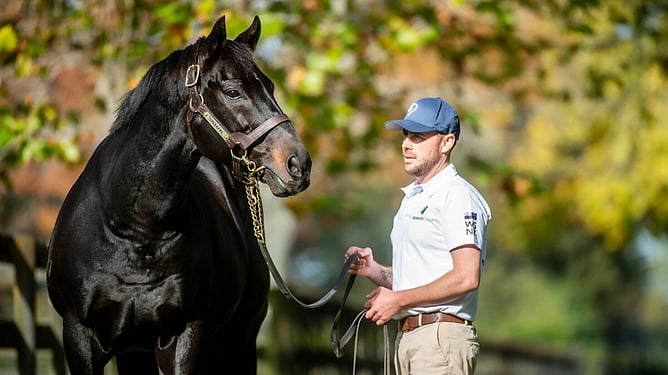
Such has been the case since the thoroughbred racing world was confronted with the news last Friday morning that Savabeel, New Zealand’s dominant stallion for the best part of two decades, had died. The rising 25-year-old had to be euthanised when, after being put out in his paddock at Waikato Stud, he was found with a fractured shoulder.
That same fate, symptomatic of ageing bones, struck his grandsire Sir Tristram when he was found to have fractured a shoulder in his paddock at Cambridge Stud in May, 1997, at age 26.
“When Sav’s groom Ryan Figgins went out to give him his breakfast, he found him favouring a front leg and he realised something wasn’t right,” Waikato Stud principal Mark Chittick explained later the same day. “Our vets diagnosed a serious shoulder injury, which with a horse isn’t something that mends readily and to be frank it was a decision, however difficult, that left us with no option.
“I read somewhere it was described as a freakish accident, but it’s probably more realistic that it happened quite innocently, such as getting back to his feet from a roll. When horses get to that sort of age they are vulnerable, and we have to accept what has happened to Savabeel. At the same time we have to be grateful for what he brought to Waikato Stud and the whole of the breeding industry.
“On a personal level he meant so much to me and my family. My daughter Charlotte was very young when Savabeel arrived here, then Harry and George came along, so the kids grew up with him.
“Through the ups and downs we’ve endured, what he achieved as a stallion has been a big part of helping us get through, they’ve lived their whole lives with him and none of us will forget that.
“Sav was a horse of a lifetime, and while it’s very sad that he’s no longer with us, we’ve got so much to celebrate.
”Savabeel, who was buried on the farm in the tradition of past champion Waikato stallions Centaine, O’Reilly and Pins, went to stud as a four-year-old in 2005 after a racing career in Australia headed by Group One wins in the Cox Plate and Spring Champion Stakes. Bred in partnership by Glenlogan Park and his eventual trainer and part-owner Graeme Rogerson, he had an exceptional pedigree.
On top of being by Zabeel, his dam Savannah Success won the Gr.1 New Zealand Oaks and STC Ansett Australia Stakes, which combined with his race record meant a huge investment to secure him for stud duties.
“I had inspected him a couple of times when he was in training with Graeme Rogerson – the first time in Melbourne after he had won the Cox Plate and finished second in the VRC Derby, then again in the autumn at Rogie’s Randwick stable,” Chittick recalled last year when it was announced that Savabeel would be joining Sir Tristram, Zabeel and O’Reilly in the New Zealand Racing Hall of Fame.
“He was a very good-looking horse with obvious performance and pedigree, although we knew he would be on a lot of studs’ watchlists. Then late one afternoon back home I got a call from Bruce Perry to tell me that there was a deal taking shape on Savabeel. My comment to Bruce was there’d be a fair bit of money involved and he responded ‘Yeah, they’re talking $10 million’.
“Doing our sums and broken down into 50 shares, that would be $200,000 per share, which translated to a service fee of $35,000. After calling just about everyone I could think of who might be interested, we had him syndicated within 24 hours.
”Savabeel’s first book of mares numbered 128 and apart from a book of 85 in his sixth season, his annual books remained at three figures, with a high of 190 mares in 2011, until in deference to his advancing years, they dipped below 100 in 2024.
All up he covered 2,973 mares in his 21 years at stud, resulting in 2,018 live foals (including 221 Australian-born with one final small crop yet to be born). Those figures are more than matched by progeny statistics sourced from Arion Pedigrees and headed by 1,063 winners of 3,382 races across 12 countries for stakes equivalent to more than $255 million.
The stars of that cohort are Savabeel’s 159 individual winners of stakes races, further refined to his 36 Group One winners of 61 elite races ranging in distance from 1200 to 3200m by horses aged from two to seven years.
Perhaps the most remarkable statistic within those figures is that 10 of his Group One winners were produced by daughters of former associate O’Reilly, while another three have the same champion broodmare sire on the next line of their distaff pedigree. And as an indicator for the future, mares by Savabeel have already produced nine individual Group One winners.
Sir Tristram set a benchmark of 45 Group One winners before Zabeel topped that by one, while the latter’s record 166 stakes winners is almost certain to be bettered by Savabeel. His raft of sires’ premierships comprises 10 New Zealand titles, the same number of Dewar titles for combined New Zealand and Australian earnings and nine Centaine awards for global earnings.
Even with Savabeel’s stud career now over, his influence and that of his predecessors will continue for generations, such is their deep presence in what amounts to international bloodlines accrued since Sir Tristram took up duties at Cambridge Stud in 1976.
The big question for the breeding industry now is whether a fourth-generation member of the dynasty founded half a century ago by the Irish-bred stallion can step up to a similar level.
Australian-based Cool Aza Beel, one of Savabeel’s two Group One-winning two-year-olds, is already the sire of the Gr.1 JJ Atkins Stakes winner Cool Archie from his first crop, while his New Zealand 2000 Guineas-winning son Embellish has left six black-type winners from his first three crops.
Waikato Stud home-bred Noverre, also the winner of the New Zealand 2000 Guineas and physically very much in the mould of his sire, was chosen in 2022 to stand alongside Savabeel and earlier this month was credited with his first winner, the Waterhouse-Bott-trained two-year-old debutant Hailstones.
Elsewhere between this country and Australia, the likes of Savabeel’s Group One-winning sons The Chosen One, Savaglee and Mo’unga are also at stud, so there is at least a number of cards in the pack to enable continuation of New Zealand thoroughbred breeding’s most potent dynasty. However, as Mark Chittick points out, for a son of Savabeel to get anywhere near emulating his predecessors’ achievements is a tall order.
“I’d love to think that a horse like Noverre would be able to step up, but what you have to realise is just how hard it is to become a champion sire.
“That’s what will always define Savabeel and the special horse he’s been for so long. That he was able to match or even surpass what Sir Tristram and Zabeel achieved is what defines him in our eyes – a horse of a lifetime.”

